
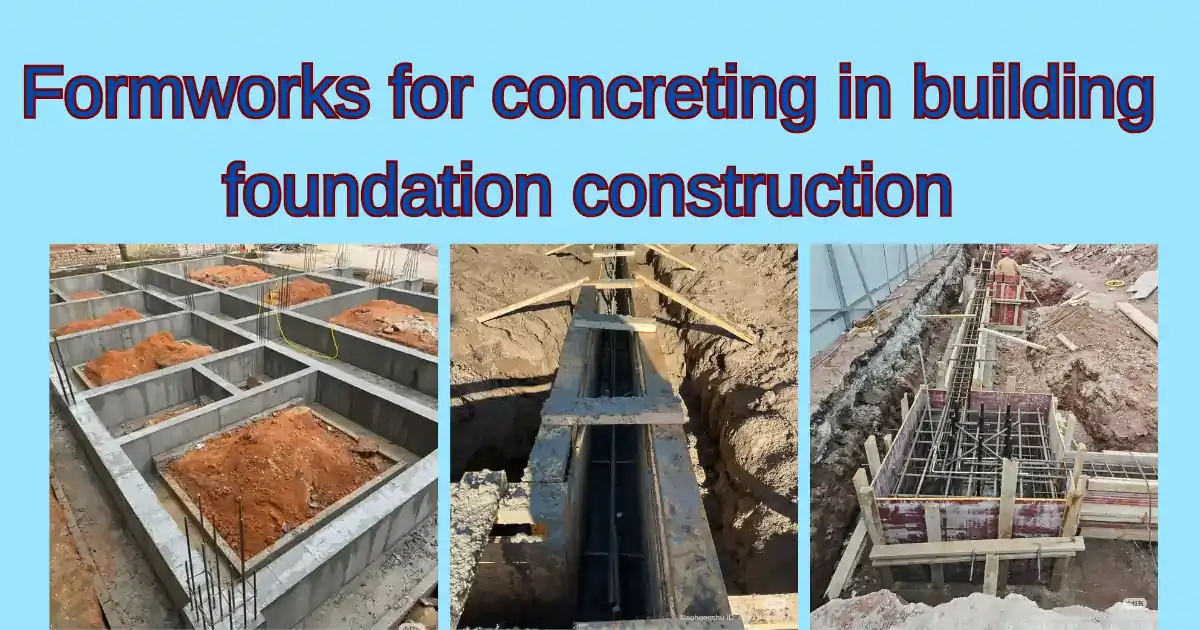
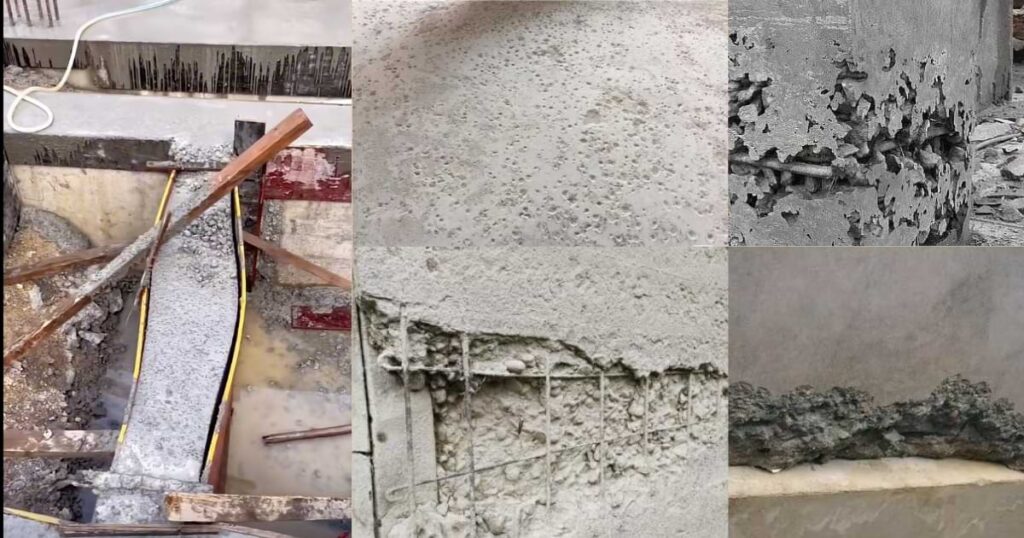
Formwork is the most important part of construction works that precedes concreting foundation construction after setting out is complete. It serves not only as a container of wet concrete, but it affects the quality, time and cost of projects. This warrants that Extreme care should be given to the quality of formworks and their installation since they form the part of the building for example voids in the concrete will be visible as other visible types of concrete defects.
The inside wall of the formwork can leave marks of defects that would be undesired in the final finished surfaces. Formworks construction is also susceptible to risk of blowouts, honeycombing, misalignment, rework, and resulting disputes over mishappenings and legal consequences.”
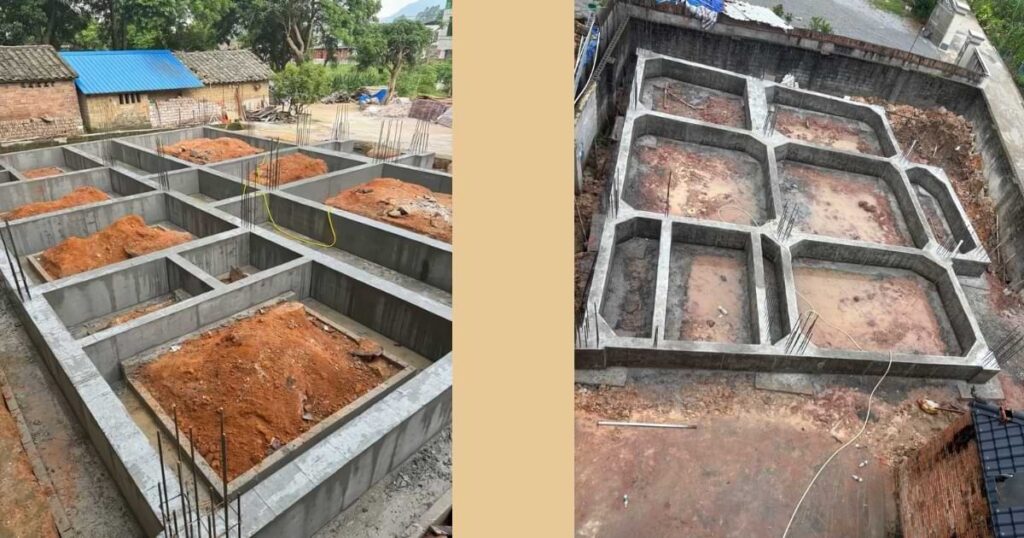
Various contractors state they struggle with understanding how much load formwork can actually bear, leading to formwork failure or over-engineering.” The load bearing capacity of formworks depends on factors such as the strength of formwork material, types of accessories like clamps, spacers and the installation of the accessories on the formwork.
According to ACI 347-04, the design load for formwork design should consider combined dead and live loads that the formwork should carry. The load of the wet concrete is applied as the Concrete lateral pressure following the formula P = ρgh (where ρ is concrete density, g is gravity, and h is depth of plastic concrete)
The formwork must be able to resist all the loads and not fall under the work. It must resist the pressure from the concrete poured during placement and the accompanying vibration forces.
Vibration induces large forces on the formwork. It is also known that on site, formwork gets used as “temporary scaffolding,” as a support for hoses, chutes, or buckets, even though it was never designed for those loads. Hence, it should be considered that the formwork can assume functions other than supporting the concrete.
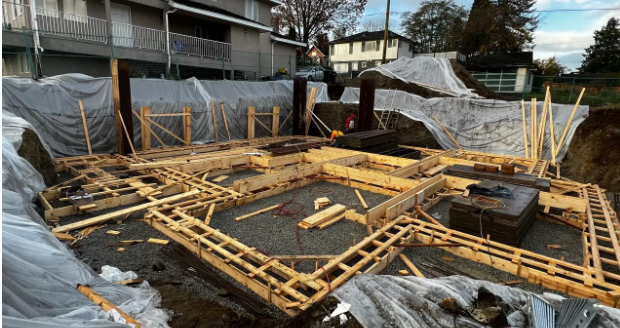
It is recorded that “Over-consolidation and excessive vibration cause formwork blowouts and unexpected failures.” Research indicates that most blowouts occur from over-consolidation, which increases the liquid pressure of concrete at that point, potentially causing bulging or catastrophic failure.
Vibrator operators must insert the vibrator quickly and withdraw it slowly and evenly(around 3 inches per second), for a short duration (typically 5 to 15 seconds per area). Each lift must be consolidated into the previous lift to remove entrapped air and eliminate voids while maintaining control over pressure buildup.
Materials for Concrete Formworks
Concrete formworks can be made of different materials. When timber is used different sizes can be selected as appropriate.
Some contractors argue whether reusable steel forms, cardboard tubes, or fiber-reinforced tubes are “worth it.”
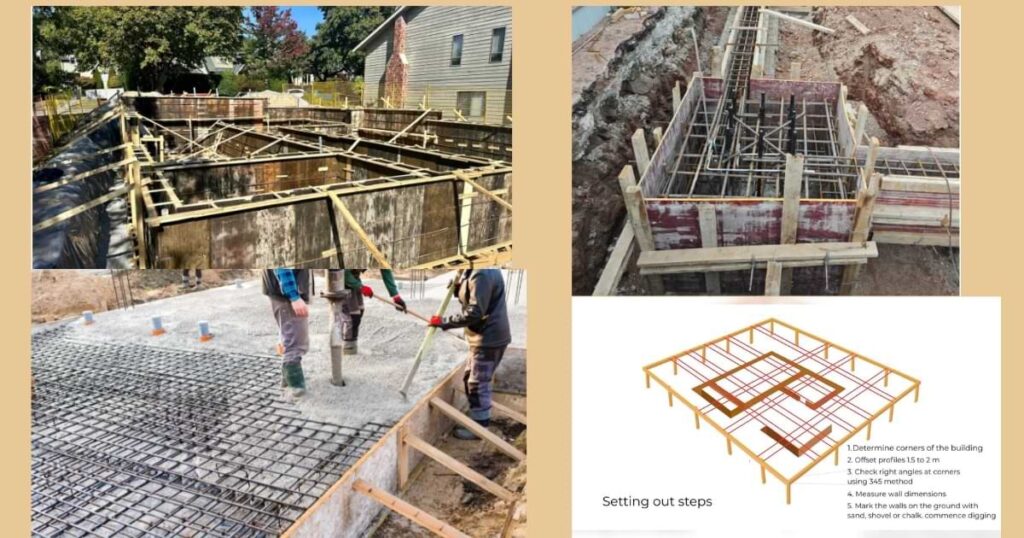
Even if properly designed proprietary systems can reduce setup time, improve accuracy, and provide better surface finish, they still require correct bracing and support to resist concrete pressure and wind loads.
Failures are usually linked not to the product but to poor installation, insufficient bracing, or exceeding the manufacturer’s maximum pour height or rate
For concrete surfaces which are going to be backfilled, the lowest quality of timber can suffice. While appearance is less critical for backfilled surfaces, strength, stiffness, and proper bracing still are.
Poor or inconsistent timber quality combined with inadequate bracing is a known contributor to formwork failure, regardless of whether the surface is later visible.
For surfaces that will be visible, good quality timber is used in dimensions of 25x100mm. Sawn timber is known to give fine concrete surfaces, it is placed on the concrete face side of the formwork for smooth finishes.
It is observed that using uniform, straight, planed or properly sawn boards, with tight joints and correctly spaced supports, greatly improves surface finish and reduces the need for patching and grinding
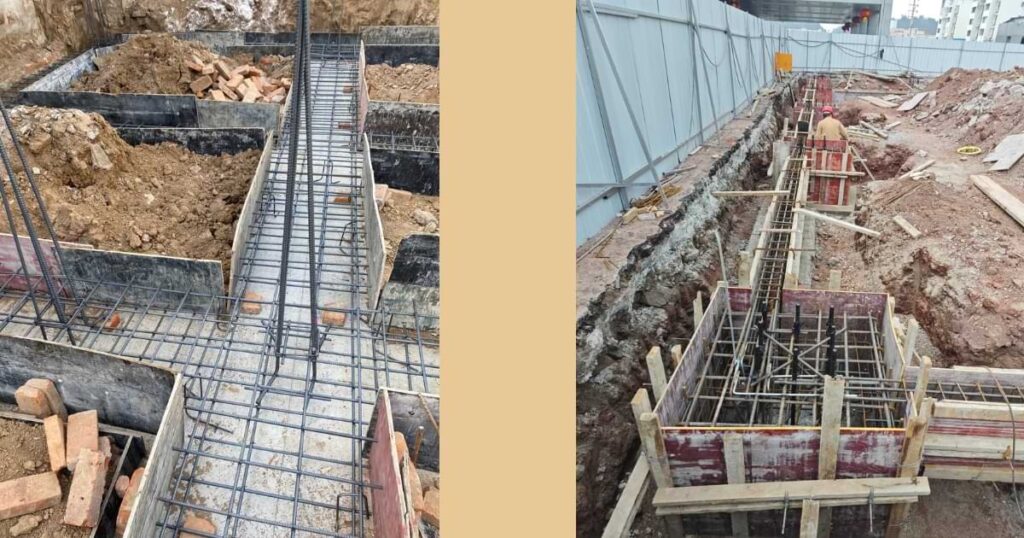
If plywood is used for surfaces, the sheets should be supported by timber studs at suitable distances of intervals depending on their thickness and the quantity of mass concrete to be supported.
“pillowing” or wavy surfaces are often caused when thin plywood spans too far between studs. Excessive spacing of studs and walers are found to be related to increased deflection under fresh concrete pressure and vibration, leading to visible bulges.
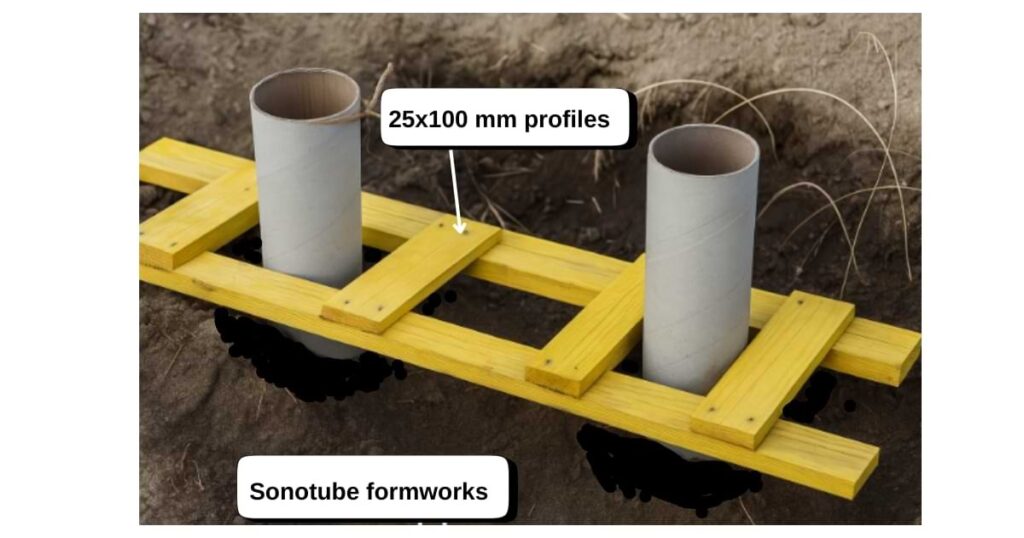
There are also formworks prepared for casting the foundation piers where special types of glass fiber, sonotubes or cement tubes can be used to cast the piers.
How to set out building formworks
When the formwork is constructed, the setting out is carried out by placing the Formworks face against the setting out lines of the building. The formwork’s position is checked to be in the plumb line. The points on the ground can be marked by paintspray.
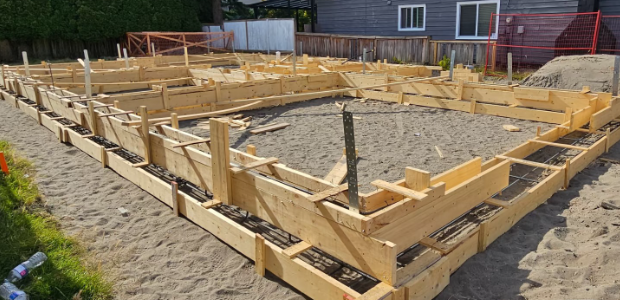
The formwork for foundation slab which is not visible and does not need to be precise can be positioned by the paint mark on the ground.
Ground slabs and pier foundations should have acceptable accuracy in position about 10mm tolerance and their positions must be carefully located using plumb lines.
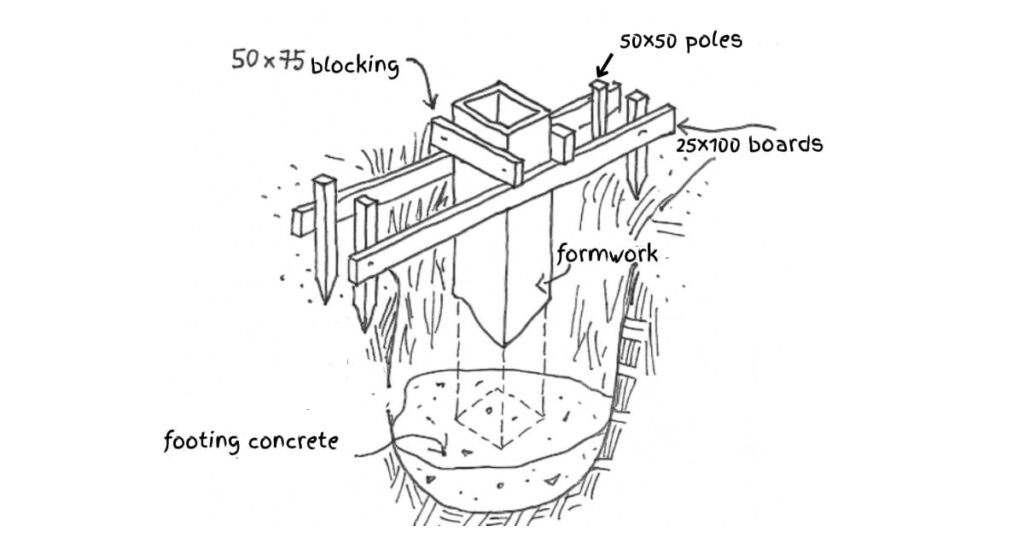
Defects such as “crooked foundations,” misaligned walls, or out-of-square slabs can result from deficient setting out and make framing and cladding difficult and lead to blame-shifting.
Therefore, accurate setting out, use of control lines, and regular verification with levels and total stations are critical, even for foundations that will later be concealed.
Errors at the formwork stage are difficult and costly to correct later and may affect structural performance, especially where column or pier locations are tied to upper floor layouts
One of the major challenges in concrete formwork is maintaining proper alignment and stability until the concrete has fully set.
Inaccurate formwork alignment causes dimensional errors, shape distortions, weak points, uneven load distribution, and potential corrosion of reinforcement steel due to moisture exposure.
Misaligned formwork often becomes apparent only after the formwork is stripped, typically requiring chiseling, surface repair, or rework—adding significant time and expense to the project.
Steps to place formwork
First the formwork supports are installed with their inclined profile timbers nailed in timber poles driven into the ground or other supports. The setting out wires from the setting out profile timbers are not proper to be used for this purpose as they can easily become moved and swayed.
The supports are checked to align with the plumb and then the timber boards are fixed which will form the face of the concrete to be casted.
The timber boards position is marked on the supports and the concrete surface edge is also marked on the timber board.
All the level positioning of the formwork should be done by laser or survey instrument specially for large site ground. Using spirit level or sighting can introduce errors in height.
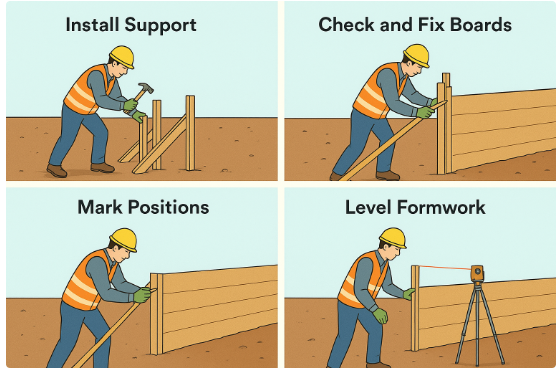
Precise level positioning helps avoid inconsistent levels between different pours that can cause steps, grinding, and disputes over “who measured what.”
Professional recommendations from surveying and construction management sources support the use of laser levels or total stations for accurate elevation control, particularly over large distances, and warn that relying only on manual sighting or basic spirit levels increases accumulated error.
Establishing a clear benchmark and checking multiple points along the formwork before the pour is now standard best practice
Bracing and Lateral Support
Many complain of “Formwork fails due to inadequate bracing and insufficient support systems not being properly connected.”
The supports or “kickers” are reported to be inadvertently kicked, bumped, or re‑nailed on some projects after the initial setting out, leading to visibly skewed or out-of-plumb forms even when they do not structurally fail.
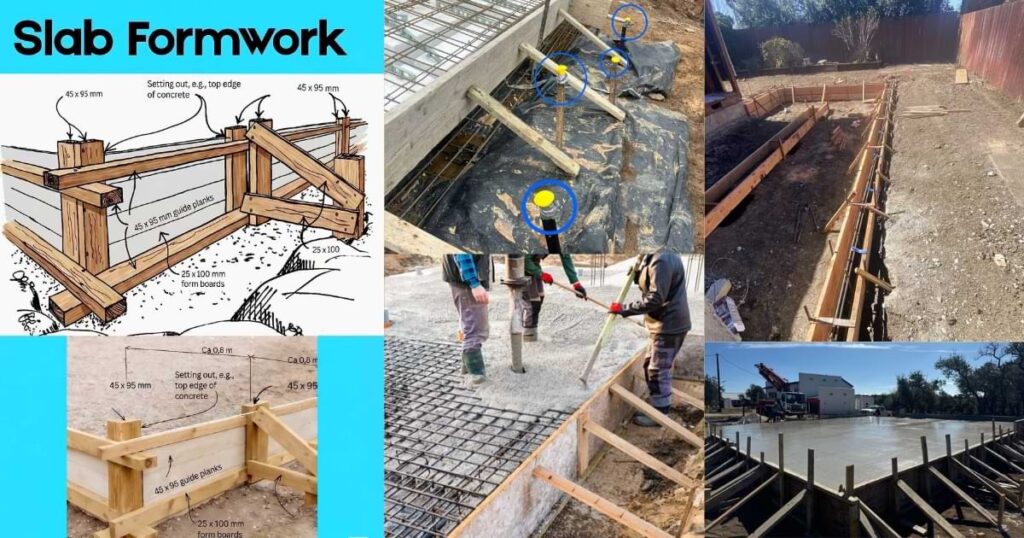
There is risk of Formwork failures due to inadequate bracing and poor attention to temporary supports. These are major causes that can trigger collapse under load.
Using robust stakes, diagonal braces, and double-checking line and level before pouring are low-cost measures that eliminate much of this risk
To strengthen formworks the support profiles that are connected together with guide timber boards and the timber boards are nailed from inside.
insufficient cross bracing and horizontal bracing of shores are common causes of formwork failure, because poor bracing generates lateral force and creates lateral deformation of supporting members.
When a failure occurs at one point, inadequate bracing may permit the collapse to extend to a large portion of the structure and multiply the damage.
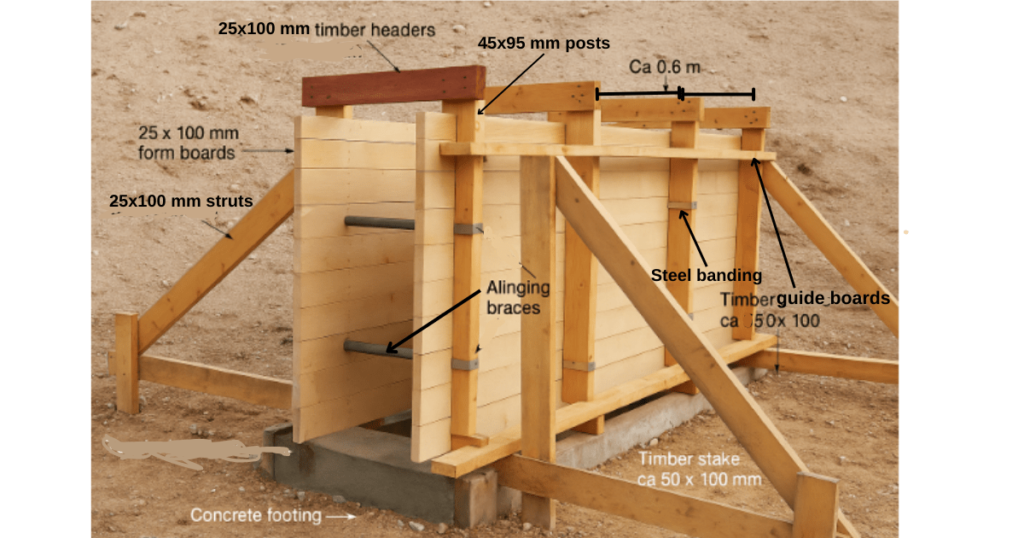
For concrete walls it is necessary to have higher accuracy of measurement. For this purpose the timber form boards can be tied together with 1x25mm steel strap wire or special braces fixed in the supports in each side of the formwork.
spacers are also installed to keep the height distance between the formwork’s side walls. The spacers are taken out after casting.
There are observations of walls being “fat” or “thin” compared to the drawings, which causes problems for rebar cover, door frames, and subsequent trades.
Technical guidance on formwork and structural safety notes that inadequate spacers and poorly controlled wall thickness can lead not only to dimensional problems but also to reduced cover to reinforcement and durability issues.
Using robust spacers at the specified spacing and confirming wall thickness at multiple points helps avoid non‑conformities that may otherwise only be discovered at inspection or fit‑out stage
Pre-Concreting Preparation
It is necessary to prepare beforehand with all that should be inserted before casting starts. With ground slabs, there must be a plan for pipes (water, drainage), electric and tele conduits, isolation under the slab, and reinforcement must be finished.

A recurring complaint is late design changes or poorly coordinated MEP, leading to last‑minute cutting of fresh concrete or ad‑hoc holes drilled through structural members.
The implementation of early coordination between structural, architectural, and MEP layouts, especially for slabs and foundations, ensures the casting is done according to design.
This reduces rework, avoids weakening structural elements, and prevents disputes over responsibility
For making holes in the concrete for inserts and installation purposes, formwork boxes of thin timber boards or sheets of size 12-16 mm should be used. This is to avoid difficulties of removing them after the concrete hardens. Do not forget to fix steel details and stop steel plates—for example, for garage doors—that need to be casted in the concrete.
Formwork Moisture Management
Before concreting, moisten the formwork with water so that it does not suck water from the concrete. Watering also potentially can help remove the formwork easier.
Site workers frequently ask whether wetting the forms is enough, or whether form release agents are necessary, and they also complain about panels being damaged during stripping.
Technical recommendations from construction manuals and manufacturers state that, for timber and plywood, lightly wetting before pour can reduce absorption, but the primary measure to ensure easy stripping and protect the form face is a correctly selected and evenly applied release agent.
Reusing dirty or damaged forms without cleaning and proper release is a well-known cause of sticking, surface tearing, and shortened panel life.
Formwork Removal Timing and Procedures
Contractors and site engineers raise the issue of “Uncertainty about when to remove formwork that does not cause either premature failure or project delays.”
Formwork removal timing is critical and varies based on structural type and curing conditions:
For Vertical Structures (walls and columns,sides of beams): Forms are typically removed after 12 hours. According to ACI 347 and international standards, this timing ensures adequate strength while maintaining project efficiency.
For Horizontal Structures (slabs and beams):
- Beams spanning up to 6 m: 7–14 days
- Beams spanning over 6 m: 14-21 days
- Arches centers 7-14 days
- One way Slabs: 4-7 days for spans up to 6 m; 7-10 days for spans over 6 m
- For two-way slabs, ACI does not specify a fixed number of days for formwork removal.Stripping time depends on whether reshores are provided and must be determined by the engineer.
Concrete should reach approximately 70% to 80% of its specified 28-day compressive strength before formwork removal. Full curing takes approximately 28 days, but sufficient strength for form removal typically develops within 7–14 days depending on mix design and ambient conditions.