
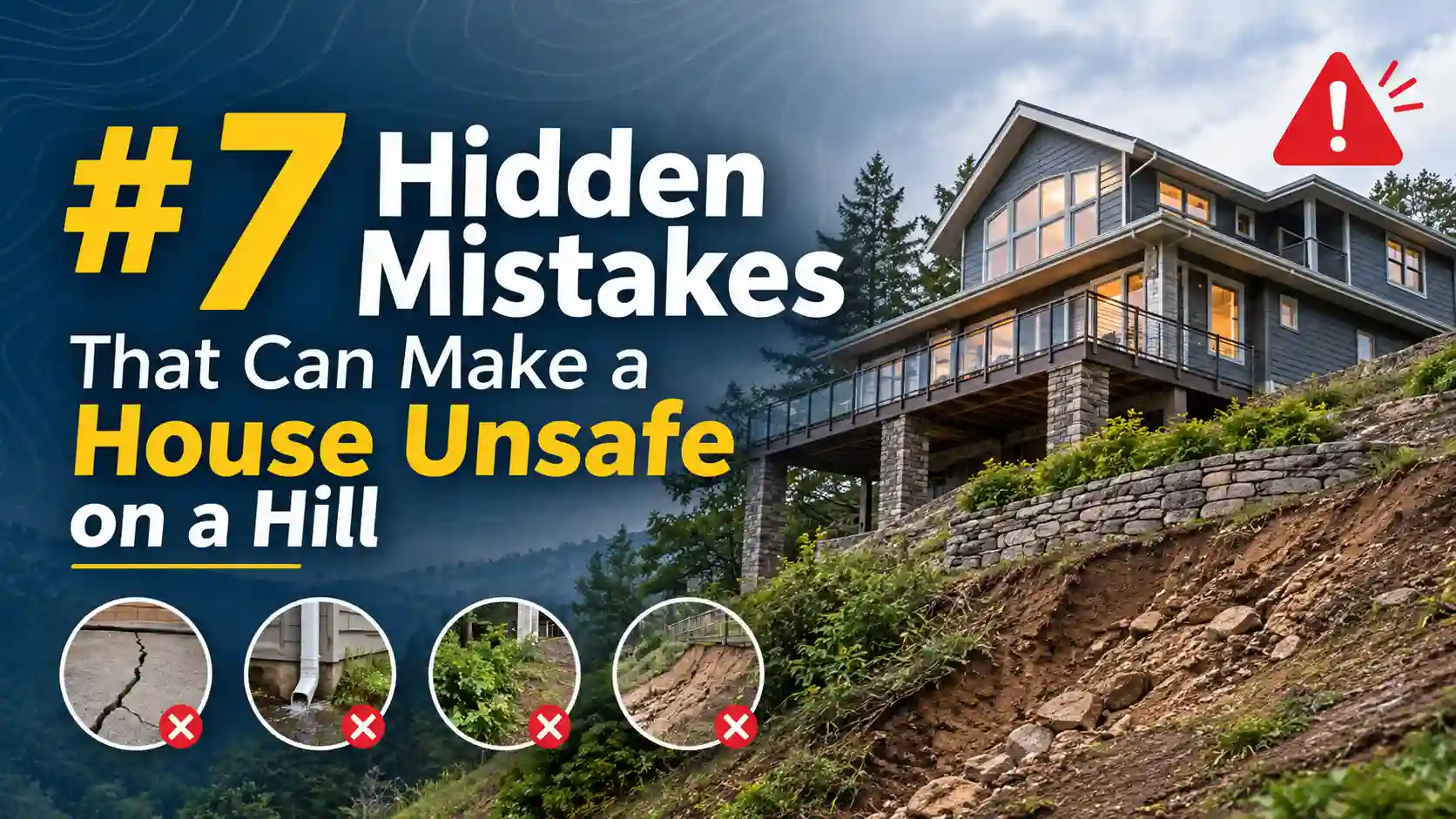
A beautiful house on a hillside can look perfectly safe—but the biggest problems may be hidden beneath the surface.
Soil movement, poor site investigation, water, slope modification, and expansive clay can create problems that may not become obvious until months or even years after construction.
Here are 7 hidden mistakes to watch for before building or buying a house on a hill.
1. Mistake: Falling in Love With the Site Before Investigating It
A hillside may look stable, attractive, and ideal for a house while hiding problems such as:
- Landslides
- Settlement
- Unstable soil
- Foundation problems
- Groundwater
- Expansive clay
a building site should be investigated rather than judged only by appearance. Do not depend on real estate agents to know about the condition of the building site or to say the truth about the real condition.
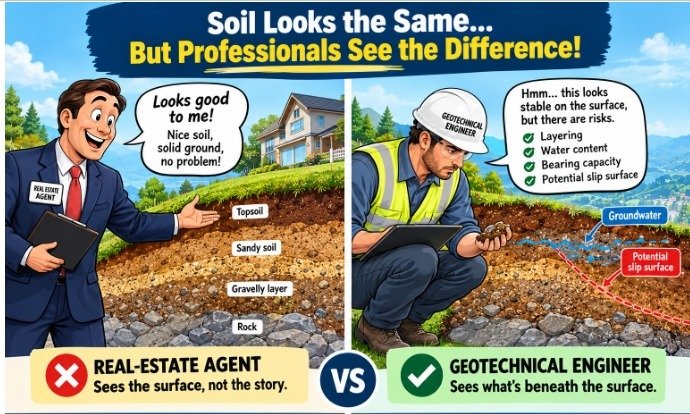
Warning signs are not always obvious, which means they need specialised persons to accurately read them, and some problems may take years to fully develop. Home insurers are also not dependable as they pick up what failure has happened only.
Investigate the site before buying or building.
For a potentially difficult hillside site, involve a geotechnical engineer or engineering geologist rather than relying only on visual inspection or advice from a real-estate agent.
A professional investigation can identify soil and slope conditions before they become expensive construction or foundation problems.
2. Mistake: Only Looking at Your Property
A common mistake is inspecting the house but ignoring what is happening around it.
The surrounding neighborhood can provide important clues.
Look uphill, downhill, and to both sides for:
- Cracked houses
- Slipping hills
- Sunken yards
- Sunken roads
- Other signs of ground movement
One problematic property may be part of a much larger slope or ground condition. Also a lot of For sale properties can give a clue about problems.
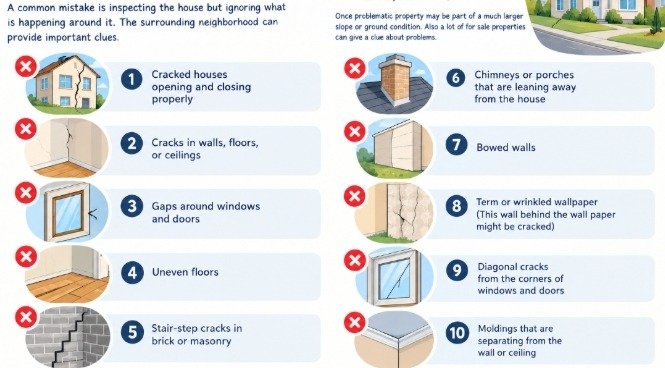
Before buying or building, inspect the whole surrounding area, not just the lot.
Look for repeated patterns. If several nearby properties have cracks, tilted structures, or unusual settlement, the problem may be related to the ground rather than one individual building.
3. Mistake: Assuming “No Visible Problem” Means Safe Ground
Some of the most serious soil problems like expansion clays are not immediately visible.They also get least attention when the problems occur most often. The consequences are not as dramatic as some news that gets huge attention such as a flood damaging a house.
The slow loss of a house but in such conditions can bring inconveniences to the owners and those living in it. They are not reported in levels of attention deemed as for other failures such as the flood or fire because there are no people around with sufficient understanding or appreciation of the situation to give due attention and report it. That is because the problems happen slowly.
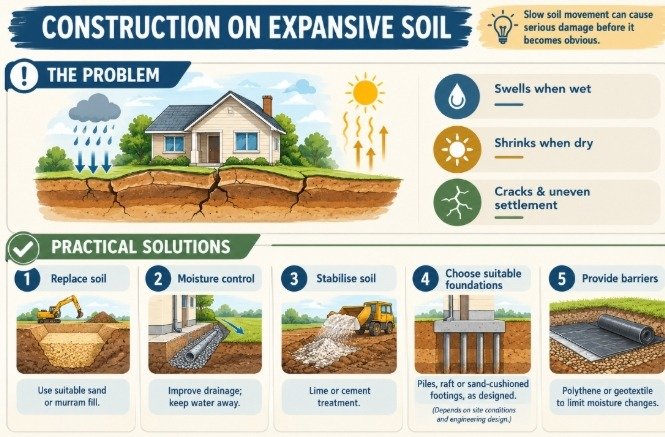
Take expansive clay, which can move as its moisture condition changes. It can push upward on structures or exert pressure against walls.
The danger is that the problem may develop slowly rather than appearing as a dramatic failure.
Do not judge soil only by what it looks like at the surface.
Where expansive clay or other problematic soils may exist, obtain appropriate soil investigation and engineering advice before construction.
The key lesson is:
Hidden soil can create visible structural problems later.
4. Mistake: Trusting the Real-Estate Agent to Identify Engineering Problems
When we buy a used car we do not depend entirely on the sales person but we test drive to check it and make sure the car works properly. But in the case of buying a house it is difficult to do that.
When checking a house or building site, it is also probably difficult to entirely depend on real estate agents that represent legally or are commissioned by owners.There may be problems they do not know about or have forgotten about.
Some problems may also take months or years before happening even if the clues were present. A real-estate agent may know the property, but that does not necessarily mean they can identify geotechnical problems. If you ask for instance if there is expansive soil, a real estate agent can say there is no problem they are aware of but with puzzlement over being asked.

Some site problems may not even be known by the owner or agent.
The source gives the example of problems that only become obvious years after the property transaction.
Treat the property inspection and the geotechnical investigation as separate issues.
For a hillside property, ask:
- Has the site been investigated?
- Are there known landslide issues?
- What type of soil is present?
- Has the slope been modified?
- Are there drainage problems?
- Are there previous foundation or settlement problems?
When necessary, have a qualified geotechnical professional investigate the site.
5. Mistake: Cutting Away the Bottom of a Hill
Some renovation or extension projects can involve adding new features of a house. And if it is a house beside a hill or on the way up the hill, the work can involve removing soil and the condition of the hill side may have not been accounted for correctly.
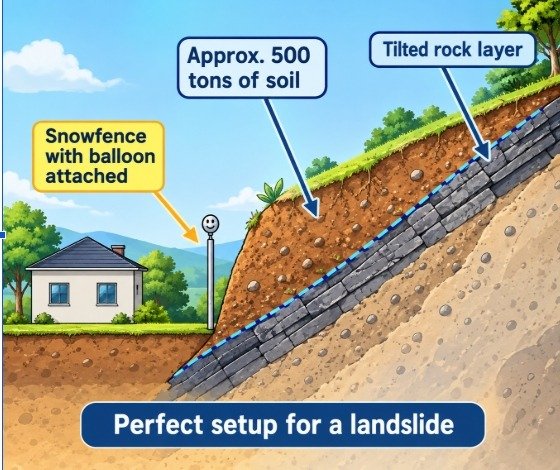
But removing material from the bottom of a slope can reduce its stability. It is because nature corrects the steepness when props are cut away at the bottom in the form of landslides .
Hills adjacent to aggressively cutting rivers or overlooking wave-cut beaches are prime locations for landslides.
Hence Removing soil from the bottom of a slope can look like a simple way to create space for:
- A garage
- Swimming pool
- Driveway
- Building platform
However in landslide prone areas it is an invitation for landslides disaster. Every hill does not mean it is prone to landslide danger. Hills that are susceptible to landslides are those that are geologically youthful. These types of hills have an active ongoing geological process that are actively sculpted by rivers or beaches.
It does not mean that removing soil will automatically call a landslide but bulldozing away the bottom of a hill can bring a landslide threat closer.
The likelihood of landslides is determined by an engineering term called factor of safety. It is a ratio of driving forces like loads over resisting forces like soil friction. When it is almost 1 it means it is a break point. Removing soil at the bottom reduces the resisting forces and reduces the factor of safety increasing the likelihood of landslide.
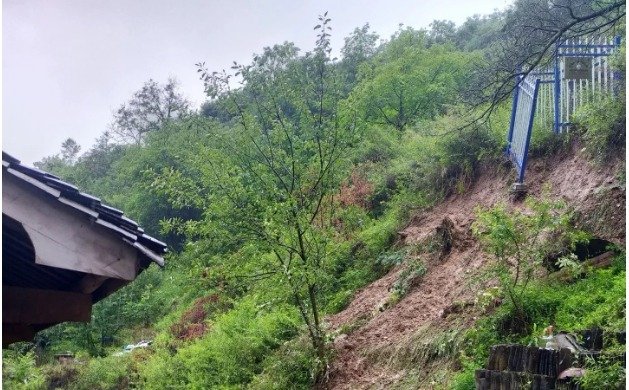
People building house at top of cliff that are actively being cut off at the bottom face a kind of danger. Their solutions to hallt the toe erosion is dumping rock or concrete at the bottom. Other more expensive solutions are building retaining walls, gabion walls etc.
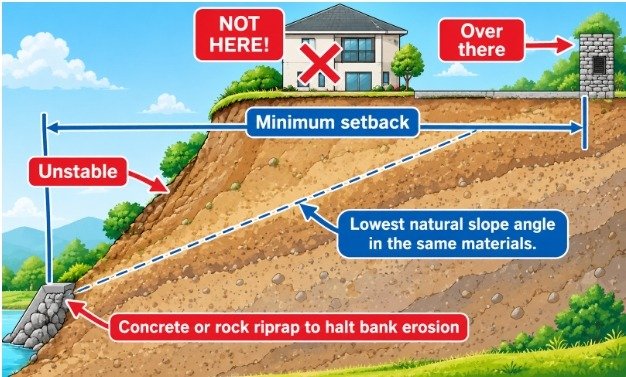
The other solution is to measure the lowest stable slope in a consistent geology and set up a safe distance to put the building.
For instance if the lowest stable slope is 4:1. If the hill has 100 ft height, the safe setback distance is measured as 100×4 from the bottom of the hill and the construction is done on this distance.
Do not treat major hillside excavation as ordinary landscaping.
Before cutting into a slope, the stability of the slope should be assessed by an appropriately qualified engineer.
The basic principle is simple:
Removing support from the bottom of a slope can reduce stability.
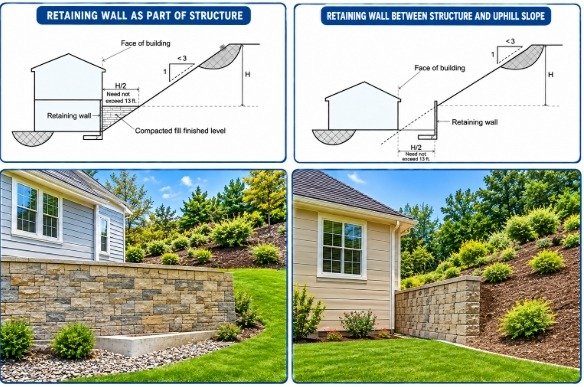
6. Mistake: Adding Soil or Heavy Loads to the Top of a Slope
The best way to prevent landslides is to stop it before it destroys the soil strength. As discussed before, the most common natural cause for landslides is cutting a hill at the toe.
When dumping a material at the toe of a hill can save or prevent a landslide, putting additional load can only create one. Walk out basements are one kind of construction where the soil is excavated and pushed on the side of a hill to see the patio disappear after some time.
Additional soil dumped on the side of a hill near the crest needs support by the soil within the soil reducing the factor of safety.
So the rule is do not dump soil on top of a hill for any reason unless professional engineering design is conducted.
People sometimes add soil near the top of a hill to create a level garden, yard, driveway, or building area.
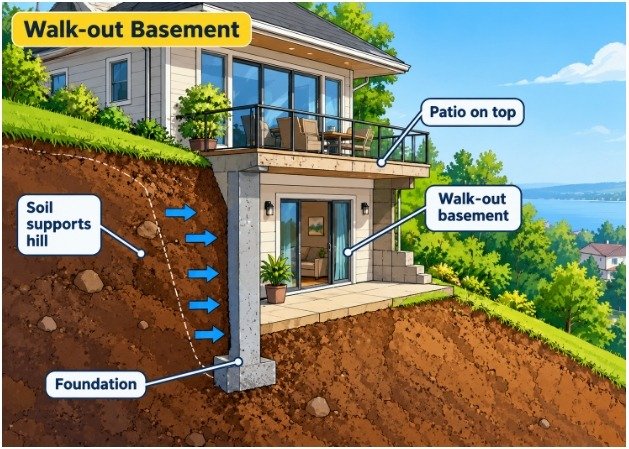
But additional soil means additional weight. This is a common way of making a walk-out basement. The soil is excavated and pushed over the cliff to serve as a base for the patio. However, as the additional load reduces the factor of safety, then it can result in the patio disappearing into the hills downside.
Water can also make the situation worse by increasing soil weight and reducing effective frictional strength.
Avoid placing uncontrolled fill or heavy loads on a slope.
If fill is necessary, it is necessary to follow the prescribed technical specifications. Follow the following procedures to ensure a robust fill that can develop sufficient safety against sliding.
- Remove topsoil, vegetation, trees, trash, and other weak materials.
- Cut horizontal steps into firm soil or rock.
- Place fill in layers.
- Compact each layer properly.
- Evaluate overall slope stability.
Simply making the fill itself stable does not automatically mean the entire hillside is stable.
7. Mistake: Allowing Water to Enter a Hillside
Water plays a huge role in slope stability. Water increases soil weight and increases its buoyancy thereby decreasing the friction resistance and these decrease the factor of safety.
So what happens to soil wet by various soil sources? Water essentially does not act as lubricant since the soil is wet already but as the factor of safety decreases and an inclined layer at base easily can set a landslide.
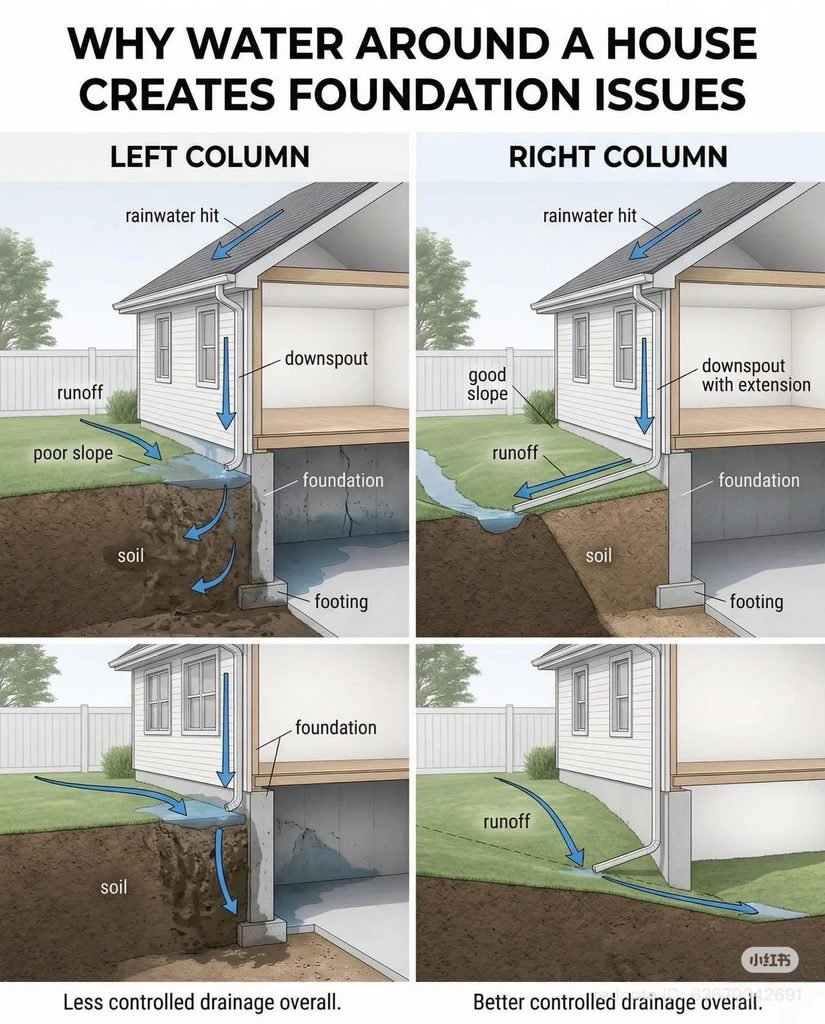
It is coincident that landslides occur during much rainfall or prolonged wet seasons because of the change in the soil property caused by water wetting.
So water can:
- Increase the weight of soil
- Reduce its frictional strength
- Lower the factor of safety
- Contribute to landslide movement
Apart from rain fall, other sources of water that can become a problem, including:
- Automatic sprinklers
- Broken water pipes
- Poorly arranged downspouts
- Driveways that concentrate runoff
- Septic drainage systems
Hence simply water should not be added to soil in hilly areas but must be diverted away.
Water collected by roofs and driveways should be directed away from landslide-prone slopes rather than allowed to infiltrate into the ground.
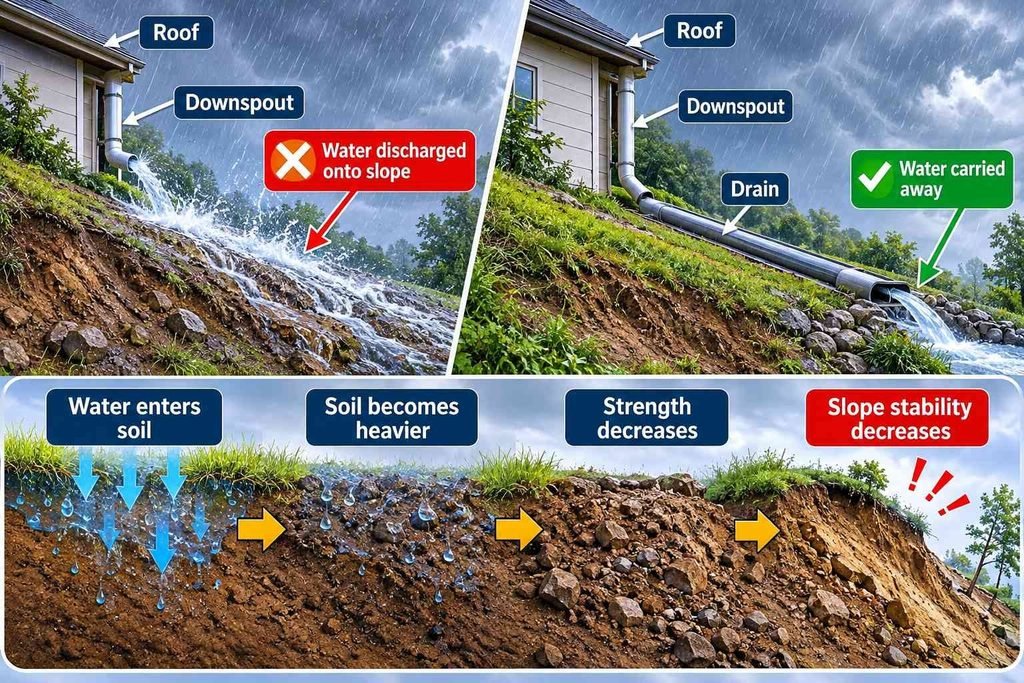
It is worth to Check if water is going in to the soil from:
- Downspouts
- Surface drainage
- Irrigation systems
- Water pipes
- Driveway runoff
- Areas where water ponds
Also it should be remembered that A hillside that appears stable after rain may be waiting more saturation and rain for landslide to occur.
The Hidden Lesson: Look at the Ground, Not Just the House
A hillside house can look perfectly normal while the ground beneath and around it tells a different story.
Before building or buying on a slope, look for:
Cracks
Tilting structures
Sunken ground
Unusual water
Slope modification
Expansive soils
Signs of previous landslides
And most importantly, don’t wait until the house develops a serious problem before investigating the ground.
For difficult or potentially unstable sites, a geotechnical engineer or engineering geologist should be involved before major construction decisions are made.
The most expensive foundation problem is often the one that could have been discovered before construction began.
Reference- The day the house fell by Richard L. Handy PHD