Wooden trusses are the main component of modern wood roof construction. Unlike traditional stick-framing with individual rafters and ceiling joists, modern trusses are mostly prefabricated triangular frameworks that distribute loads efficiently through their interconnected members.
Trusses offer efficient engineering solutions as the result of the triangular arrangement of the members. This makes them preferred in various projects for their combination of strength, efficiency, and cost-effectiveness.
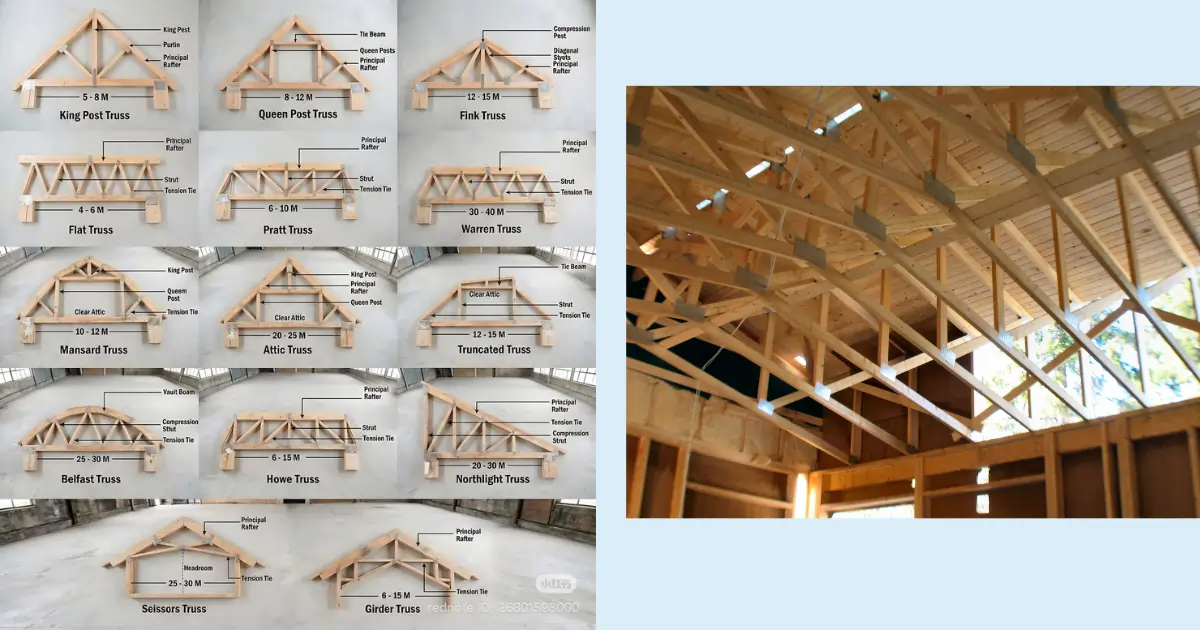
In this guide, we’ll explore how the major 14 main types of wooden trusses are manufactured and their application used in modern construction projects.
How Wooden Trusses Are Made
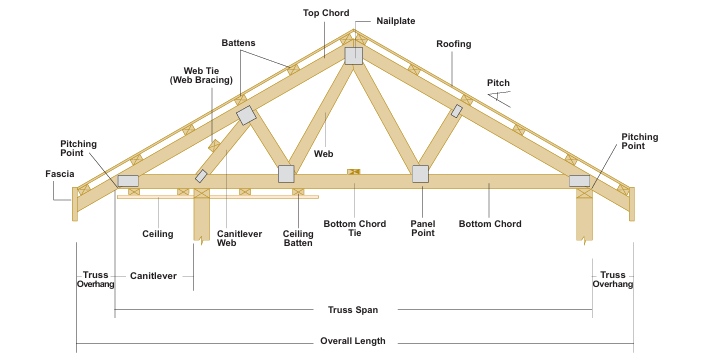
Parts of a Truss
The truss is composed of major components of the top chords which are the sloping members at the top, the bottom chord which is the bottom most member and the web consists of the members joining the chords.
Material Selection and Grading
The manufacturing process begins with selecting the right lumber. Most wooden trusses use softwood species such as the spruce-pine-fir (SPF), Douglas fir, or southern yellow pine.
The wood must be properly graded for structural use to ensure it can sustain the stress and strain under loads.
In Europe, common strength classes for trusses include C24 and C30, with TR26 being a long-standing standard for trussed rafters in the UK.
In North America,there are two grading systems one is visual grading and the other is machine stress-rated (MSR). The MSR lumber is often used for critical applications like trusses because it provides a more precise understanding of each piece’s strength than visual grading alone.
The Manufacturing Process of wooden trusses
1. Design and Engineering:
Each truss is custom-designed using specialized software that calculates loads, stresses, and deflection limits based on building codes and local conditions (snow loads, wind speeds, seismic factors).
2. Precision Cutting:
Computer-controlled saws cut each member to exact lengths and angles. This precision is critical because even small errors can compromise the structural integrity of the triangular geometry.
3. Assembly: Members
are laid out on large jigs (flat tables with stops and clamps) that ensure accurate geometry. The triangular shape is fundamental to truss behavior—triangles are inherently rigid and don’t deform under load like rectangles would.
4. Connection Methods:
– Gusset Plates: The most common method in modern production. Metal plates with teeth are pressed into the wood at joints using hydraulic rollers. These plates transfer forces between members.
– Bolted/Welded Connections: Used for heavy timber or exposed trusses where aesthetics matter.
– Mortise and Tenon with Wooden Pegs: Traditional timber framing technique, now often reinforced with hidden steel for code compliance.
5. Quality Control: Trusses are inspected for plate embedment depth, lumber defects, and overall dimensions before leaving the factory.
6. Delivery and Installation: Trusses arrive on site as complete units, dramatically reducing labor time compared to stick-framing. A crane typically lifts them into place, where they’re secured to walls and braced temporarily until sheathing is applied.
The 14 Types of Wooden Trusses: Technical Descriptions and Applications
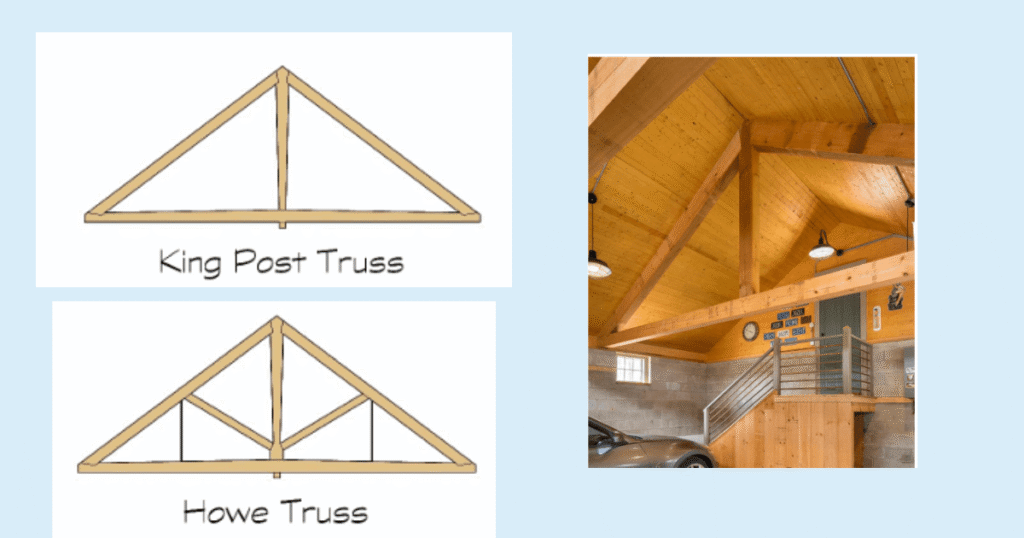
1. King Post Truss(Span Range: 5–8 meters)
This is the simplest and most common pitched truss design for short spans. It consisting of two principal rafters joined at the apex, a horizontal tie beam at the base, and a single vertical king post connecting the apex to the midpoint of the tie beam. Normally in roofs roof loads are applied through the purlins or structural panels to the top chord. The king post in such setting is a zero stress member and only carries the load of the bottom chord or the attached loads to it.
Some times diagonal members are added to it particularly in short bridges and then the roof loads are transferred to base of the king post. Such modified king post truss are sometimes called king post with braces or howe truss.
Best Applications:
- Small residential garages and sheds
- Porches and small additions
- Decorative exposed ceiling features in rustic or traditional architecture
- Any project where simplicity and low cost are prioritized over maximum span
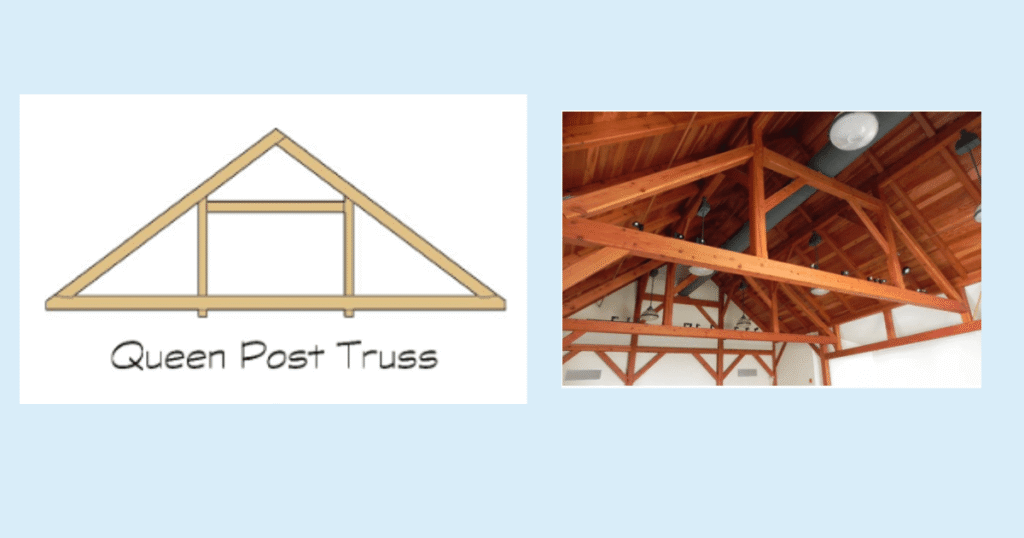
2.Queen Post Truss(Span Range: 8–12 meters)
An evolution of the king post truss with two vertical queen posts instead of one central king post. This creates a rectangular central panel that provides more usable interior space. The tie beam is effectively split into three segments, with the queen posts supporting the purlins at two points along the span.
Best Applications:
- Medium-sized residential homes
- Barns and agricultural buildings
- Buildings where a wider clear span is needed but a full attic truss is unnecessary
- Traditional-style architecture where exposed timberwork is desired
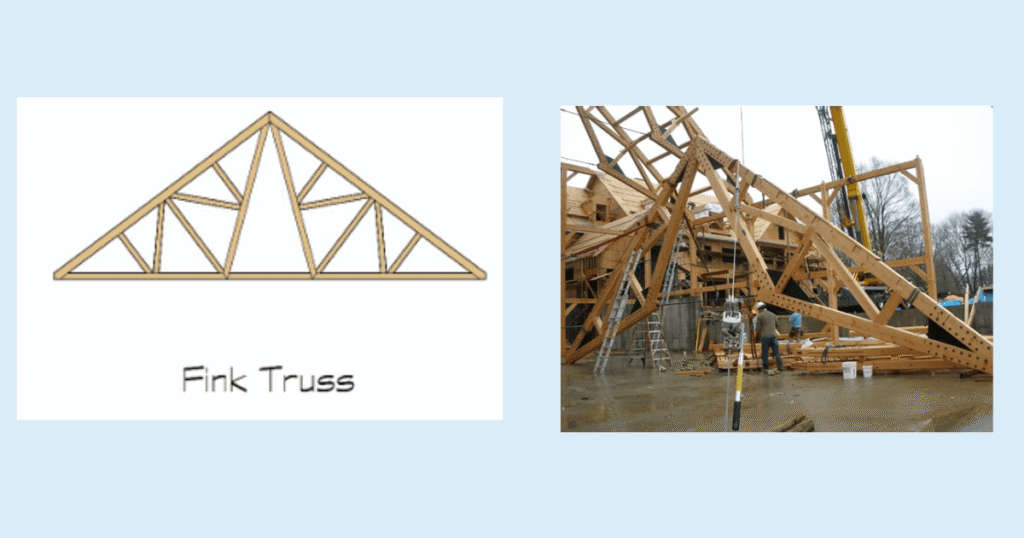
3.Fink Truss(Span Range: 12–15 meters)
A pitched truss with a central king post and diagonal struts fanning out from the king post to the rafters, forming a W-shape in the webbing. It is the most widely used in residential homes. The diagonals are in compression, while the bottom chord acts as a tension tie. This configuration efficiently transfers roof loads to the supports.
Best Applications:
- Standard residential housing (the most common truss in modern homebuilding)
- Light commercial buildings
- Any project requiring a cost-effective, mass-produced solution for moderate spans
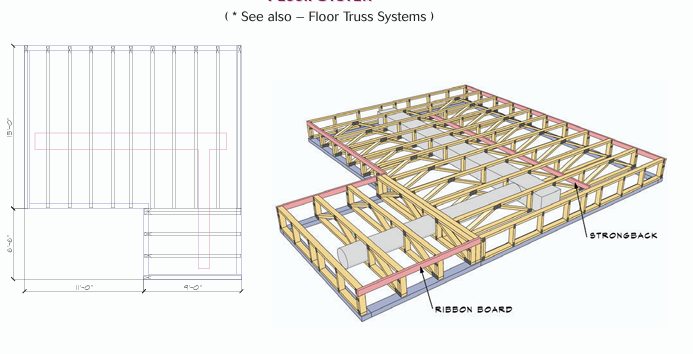
4.Flat Truss/ Floor trusses-Span Range: 12-18 meters
A parallel chord truss with a flat profile, using a combination of vertical struts and diagonal tension ties in a triangular web pattern. The top and bottom chords are parallel, making it ideal for flat or very low-slope roofs. The diagonals are typically in tension, while vertical members carry compression.
Best Applications:
- Flat roof commercial buildings
- Floor systems (as joist replacements)
- Mezzanines and platforms
- Modern architectural designs with flat rooflines
- Industrial buildings where mechanical equipment sits on the roof
5.Pratt Truss-Span Range: 6–10 meters
A parallel chord truss where diagonal members slope downward toward the center and are in tension, while vertical members are in compression. Named after Thomas Pratt, this configuration is efficient for longer spans because the longer diagonal members (which are more prone to buckling) are in tension rather than compression.
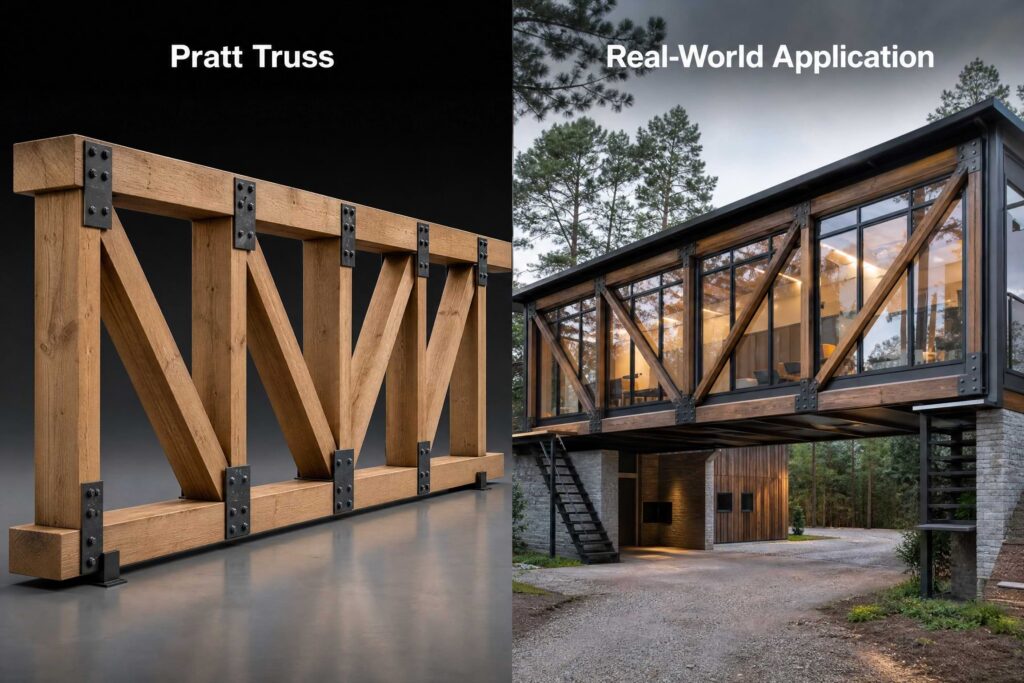
Best Applications:
- Floor trusses in residential and commercial construction
- Bridge construction (the original application)
- Industrial buildings with moderate spans
- Situations where the longer diagonal members benefit from being in tension
6.Warren Truss-Span Range: 15–30 meters
: A parallel chord truss with alternating diagonal members forming a series of equilateral triangles. Unlike the Pratt truss, Warren trusses have no vertical members—only diagonals. Each diagonal alternates between tension and compression along the span. This creates a very efficient structure with minimal material.
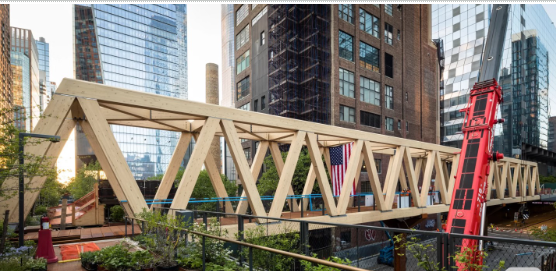
Warren truss bridge made of Glued GLT, Timber bridge manhatans higli line park
Best Applications:
- Long-span industrial buildings
- Bridges and pedestrian walkways
- Aircraft hangars
- Auditoriums and gymnasiums
- Any application where maximum span with minimum weight is critical
7.Mansard Truss-Span Range: 10–12 meters
A pitched truss designed to create a mansard roof profile with two different slopes—steep lower slopes and shallow or flat upper slopes. It incorporates a king post, queen posts, and a tension tie, with a “clear attic” space created within the steep lower portion. This maximizes usable interior volume.
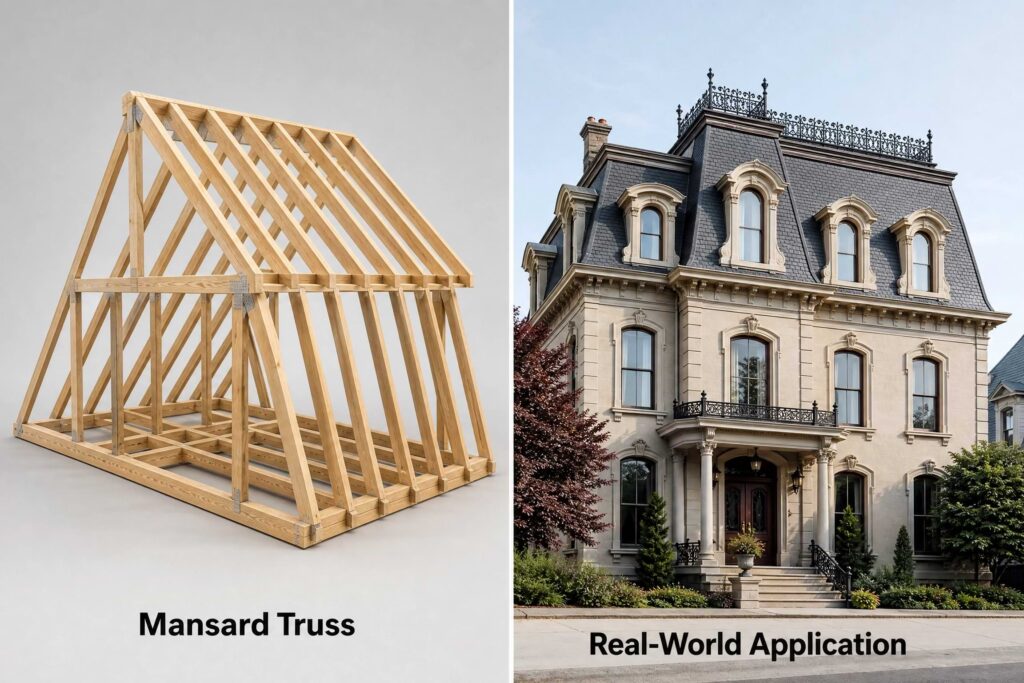
Best Applications:
- Buildings where maximum interior headroom is desired
- Historic restoration projects matching French Second Empire architecture
- Loft conversions and attic renovations
- Residential buildings where additional living space in the roof is required
8.Attic Truss-Span Range: 8–14 meters
A pitched truss specifically engineered to create a habitable room within the roof space. It features a king post, principal rafters, queen posts, and a large central “clear attic” space. The bottom chord is raised to form a floor platform, with the webbing configured to leave open living space rather than just storage.
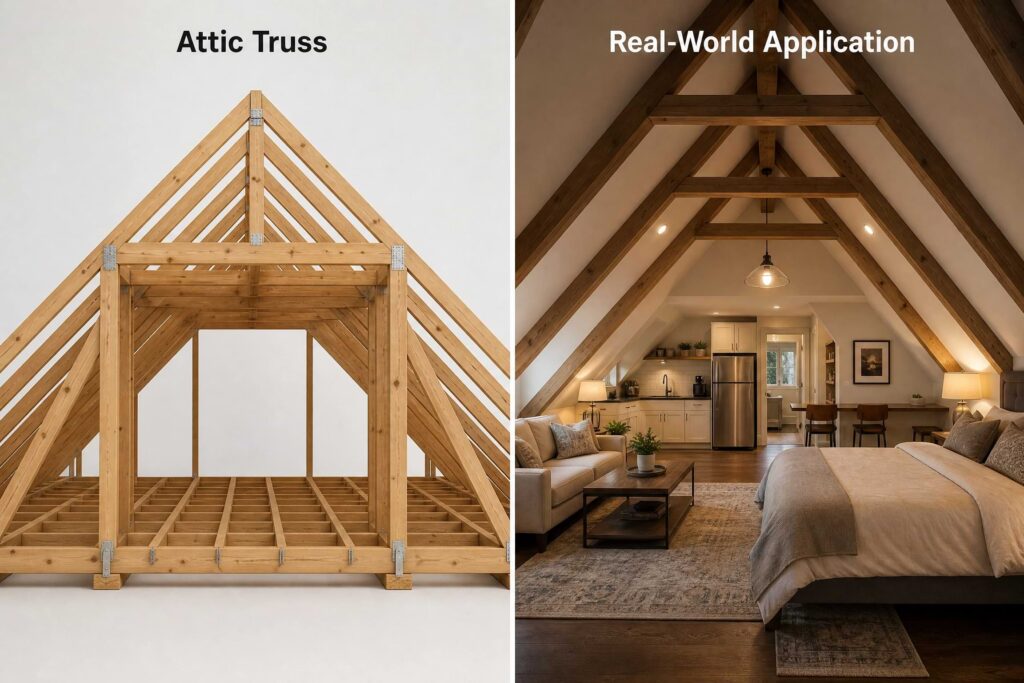
Best Applications:
- Residential homes where an extra bedroom, office, or playroom is needed
- Bungalow conversions adding a second story
- Cost-effective alternatives to full second-story additions
- Any project where finished living space in the roof is a priority
9.Truncated Truss-Span Range: 12–15 meters
A truncated truss is a truss whose top chord (the upper member or members) is cut off short rather than rising to a single peak. It is essentially a truss with a flattened or shortened apex instead of a pointed one, creating a truncated or “clipped” gable appearance.
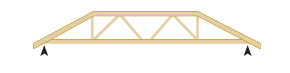
It provides a usable space than pointed apex (e.g., for a flat ceiling, an attic room, or HVAC equipment) The flat top allows for a level ceiling or platform while maintaining some pitch on the sides.
Best Applications:
- Modern architectural designs with flat-top roof profiles
- Structures where HVAC equipment or solar panels need a flat mounting surface
- Commercial buildings with contemporary aesthetics
10.Belfast Truss-Span Range: 25–30 meters
A curved or arched truss with a distinctive bow-shaped top chord. It features a vault beam forming the arch, with compression struts and tension ties creating the webbing. The curved profile naturally sheds water while providing exceptional structural depth at the center of the span where it’s needed most.
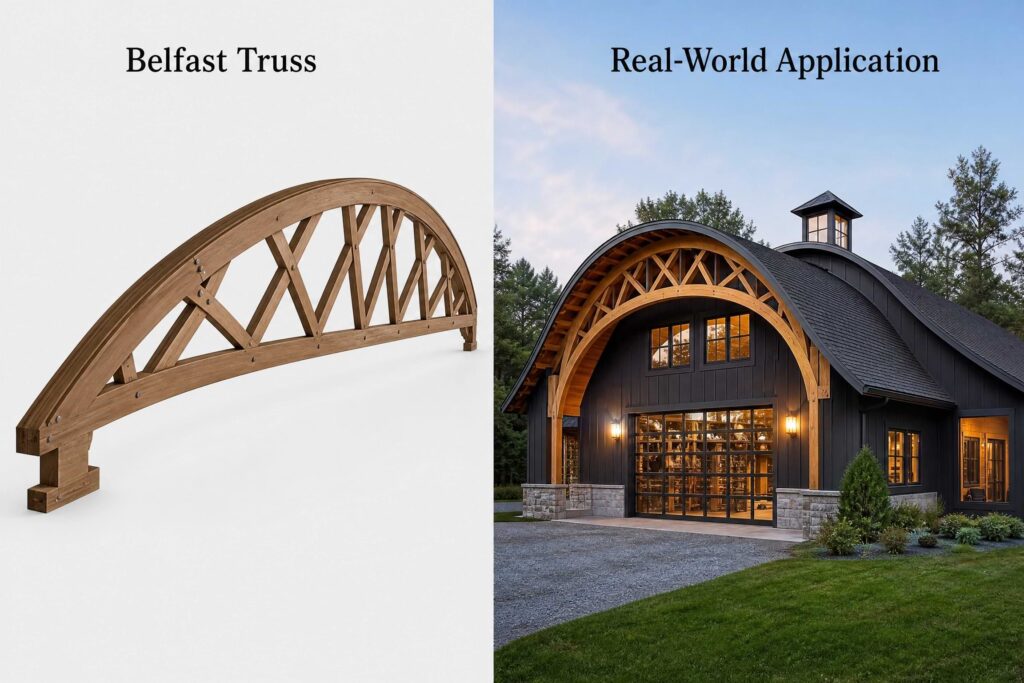
Best Applications:
- Industrial buildings and factories (originally developed for Belfast’s linen industry)
- Aircraft hangars
- Sports facilities and riding arenas
- Any building requiring a wide, unobstructed span with an arched aesthetic
- Agricultural buildings with large equipment access needs
11.Howe Truss-Span Range: 6–15 meters
A truss with diagonals sloping upward toward the center (opposite of the Pratt). The Howe configuration is identified with diagonals that are in compression and the verticals that are in tension. The classic configuration is parallel chords but it can also have sloped top chords. This makes it suitable for materials where vertical members can be made of iron or steel rods (in hybrid construction) while diagonals remain timber.Pure timber howe are rare in todays construction.
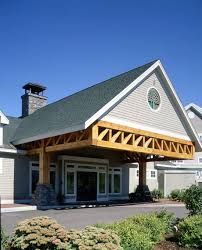
Best Applications:
- Historical building restoration
- Covered bridges
- Buildings where vertical tension members can be slender rods or cables
- Situations where compression diagonals are preferred over tension diagonals
- Mixed-material construction projects
12.Northlight Truss-Span Range: 20–30 meters
: An asymmetrical pitched truss with one steep slope and one shallow slope, designed specifically for north-facing skylights. The steep side faces north (in the northern hemisphere) to admit consistent, diffuse natural light without direct solar glare. It features a principal rafter, tension tie, and compression strut.
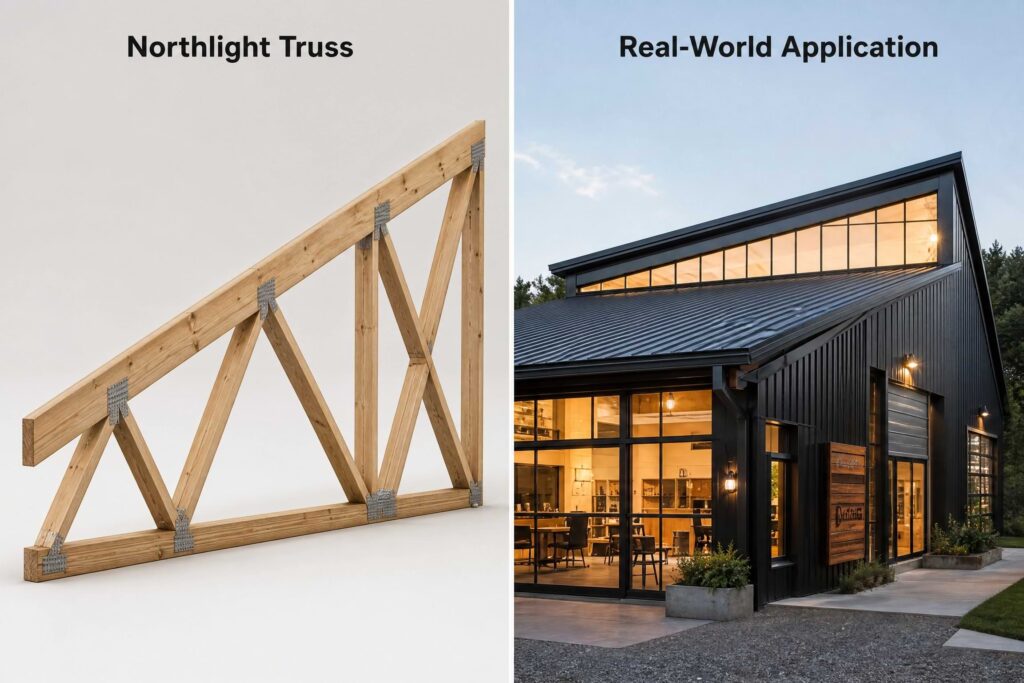
Best Applications:
- Factories and workshops requiring natural daylighting
- Art studios and galleries where consistent, non-direct light is essential
- Industrial buildings predating electric lighting (historic context)
- Modern sustainable buildings prioritizing daylight harvesting
- Any structure where controlled natural illumination is a design priority
13.Scissors Truss-Span Range: 6–15 meters
A pitched truss where the bottom chord members cross each other, forming a scissor-like configuration. This creates a vaulted ceiling effect with significant headroom in the center. The tension tie is elevated, and the crossing members provide both vertical support and lateral stability.
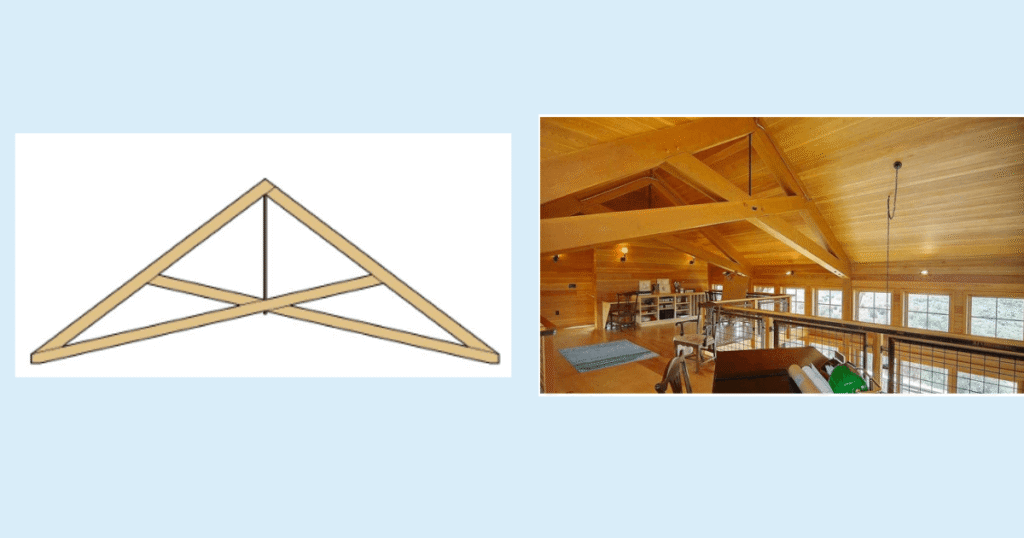
Best Applications:
- Churches and chapels requiring dramatic vaulted ceilings
- Great rooms and living rooms in custom homes
- Event halls and banquet facilities
- Any space where architectural drama and maximum interior height are desired
- Buildings where exposed timber trusses are a featured design element
14.Girder Truss-Span Range: 6–15 meters
A heavy-duty truss designed to support other trusses rather than just roof loads. It features a principal rafter and tension tie with robust webbing. Girder trusses are essentially “trusses that hold trusses”—they act as primary structural beams from which standard trusses can be hung or supported at intermediate points. They are used when the loads are too large for standard trusses or the roof geometry has complex shapes or connections.
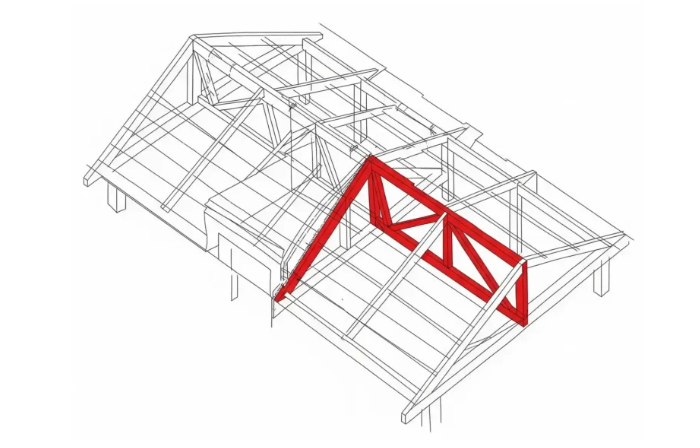
Image courtesy of: structuralwoodcorp.https://www.structuralwoodcorp.com/
Best Applications:In each case, the defining feature is the same: the roof framing plan calls for two distinct truss systems — a primary (girder) truss that bears extra load, and secondary trusses that frame into it — rather than a single uniform truss system spanning the whole structure.
- Large openings — atriums, courtyards, or skylights where a standard truss can’t span the full distance, requiring a girder to carry trusses on either side of the opening.
- Multi-span buildings — where intermediate support points are needed to break up long spans, with the girder acting as the load-bearing intermediary.
- Heavy-load applications — green roofs, solar panel arrays, or rooftop mechanical equipment that exceed standard truss load capacity.
- Attached garages — where the roofline breaks away from the main building, and a girder supports the secondary trusses framing the garage roof.
- L-shaped houses — where two truss systems meet at a corner, requiring a girder to support the trusses from the intersecting wing.
- Cross-gable roofs — where different rooflines intersect, with girders carrying the hip or valley trusses at the intersection.
- Large open rooms — vaulted ceilings, great rooms, or open-concept living areas needing longer spans without internal support walls.
- Commercial structures — warehouses, halls, or other high-load spans where standard trusses lack sufficient capacity, making girders necessary to distribute the load to fewer bearing points.
Key Engineering Principles
Why Triangles Work
The fundamental principle behind all trusses is the rigidity of the triangle. Unlike a rectangle, which can deform into a parallelogram under lateral force, a triangle maintains its shape because the lengths of its three sides completely determine its geometry. This means that forces applied at the joints are carried primarily as axial forces (tension or compression along the members) rather than bending moments, which is a much more efficient use of material.
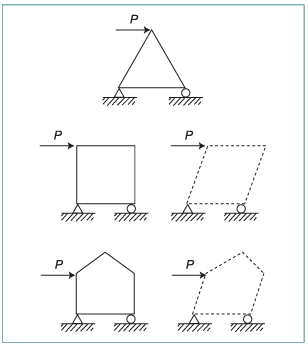
Load Paths
In a typical wooden truss:
- Top chord (rafter): Carries roof loads (dead load, live load, snow, wind) in compression
- Bottom chord (tie beam): Resists the outward thrust of the rafters in tension
- Web members (struts and ties): Transfer forces between chords and maintain spacing
Connection Design of wooden trusses
The joints are the critical points. Modern metal gusset plates use hundreds of small teeth that embed into the wood grain, creating a connection that can transfer significant forces. The plate size and tooth count are engineered for each specific joint based on the forces calculated in the truss analysis software.
Choosing the Right Truss
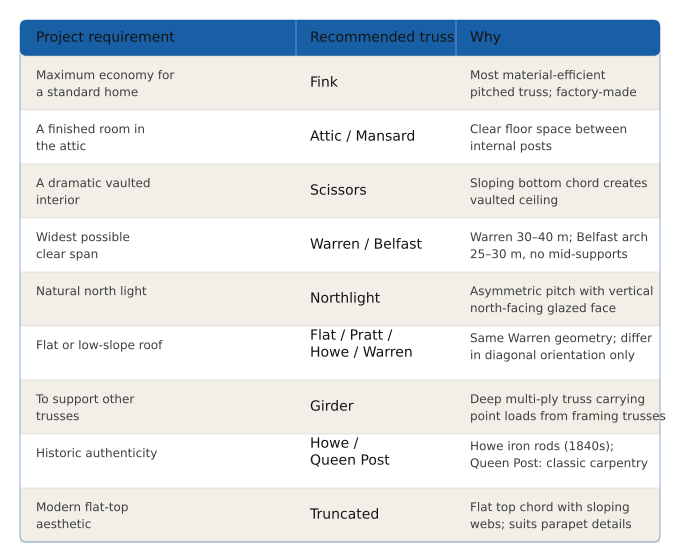
Wooden trusses represent one of the most efficient applications of engineering principles in construction. By understanding the forces at play—compression in rafters and struts, tension in ties and bottom chords—engineers have developed a family of truss types that can solve virtually any spanning challenge. Whether you’re building a modest home with standard fink trusses or a grand hall with soaring scissors trusses, the key is matching the truss type to the span, load, and architectural intent of your project.